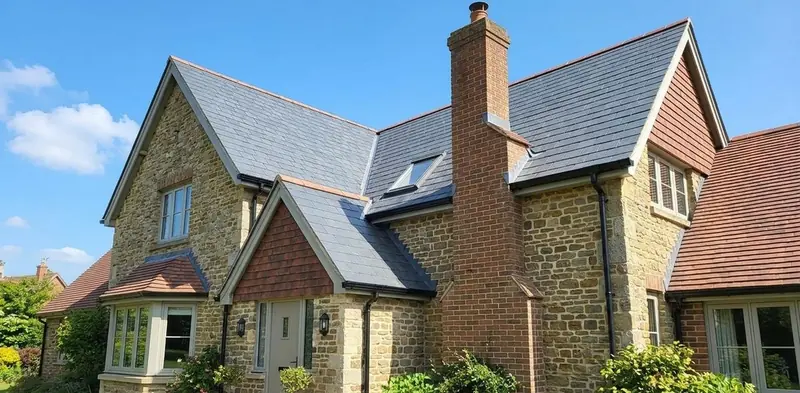
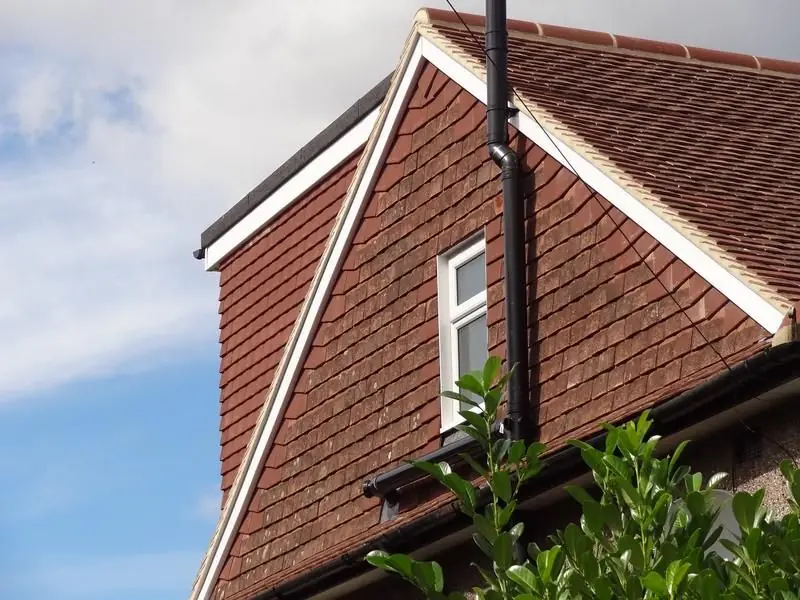
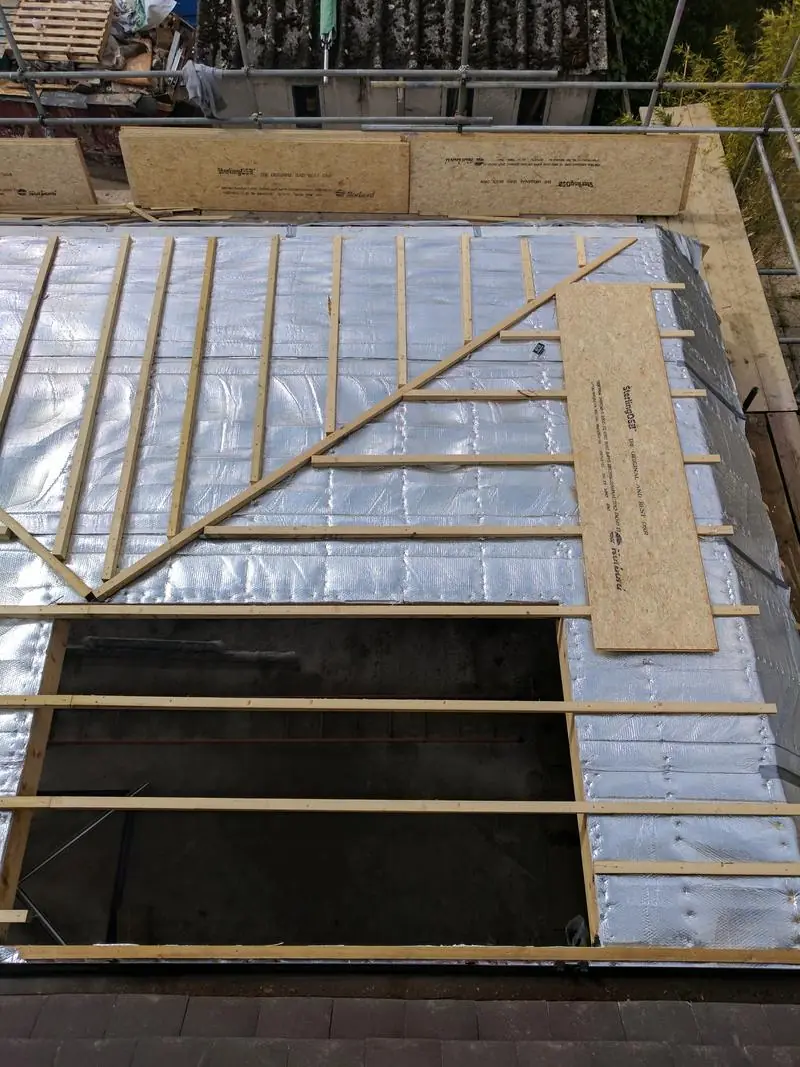
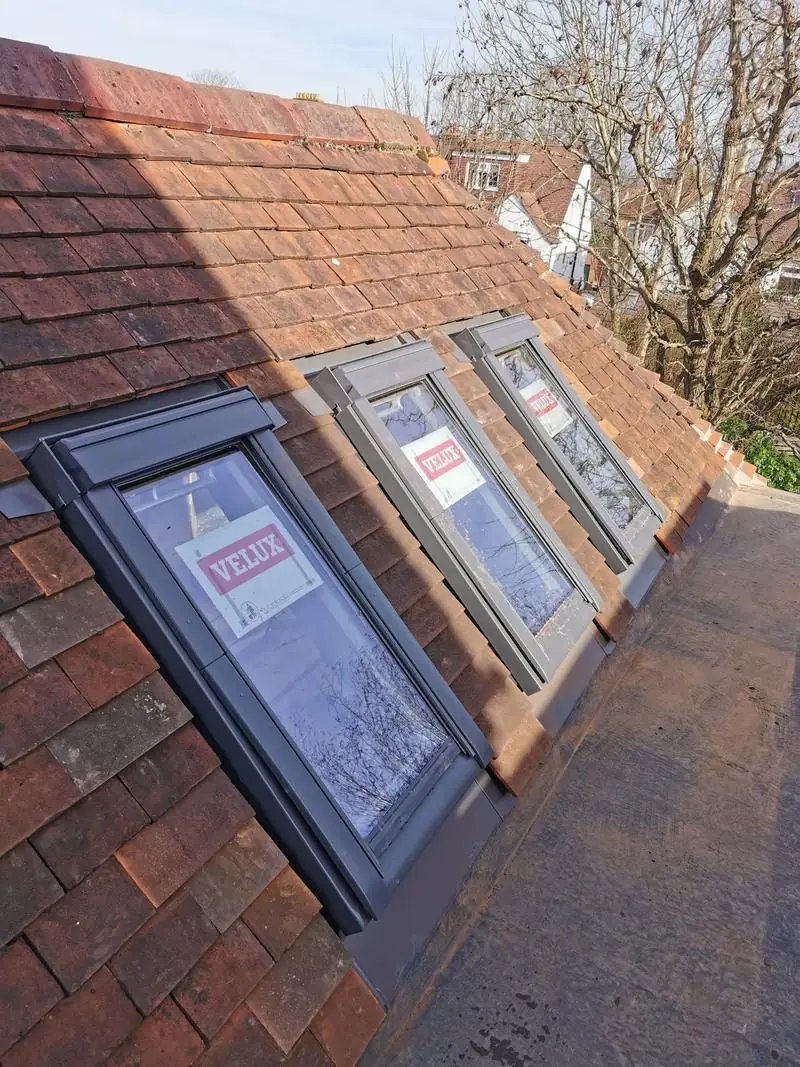
Bognor Regis sits right on the coast, and the salt air, wind-driven rain and higher wind loads all work on a roof harder than they would a few miles inland. Fixings and flashings corrode faster, north-facing slopes grow serious moss, and badly bedded ridges are the first thing a winter gale finds. How exposed a building is to wind-driven rain is a measured thing (British Standard BS 8104 grades it from sheltered to very severe), and we check your site rather than guess. For exposed fixings we specify 316 grade stainless steel, which is what the metal suppliers recommend for coastal use.
Plain answers to the questions we are asked most. These are the general rules in England; we confirm what applies to your house at the survey.
How much does a new roof cost in Bognor Regis?
As a guide, re-roofing a mid-terrace house costs £8,400 to £19,200 and a three-bedroom detached house £16,800 to £38,400, both including VAT and scaffolding. Where you land depends mostly on what is under the old tiles. New battens and membrane are a known cost; a rotten rafter foot or wall plate is not, so it goes into the quotation as a provisional sum with the assumption written beside it. Small repairs start from £360 including VAT.
Is scaffolding included in your prices?
Yes. Every roofing figure we give includes the scaffold, and the quotation says so in writing. Leaving scaffolding out is the easiest way to make one roofing quote look cheaper than another, so it is the first thing to check when you compare prices.
Which is best for a flat roof: GRP, torch-on felt or a liquid membrane?
It depends on the roof. GRP fibreglass cures into one seamless, rigid skin that takes foot traffic and makes clean details around rooflights and upstands. Torch-on felt is built up in layers bonded with heat and suits many straightforward roofs. A liquid-applied membrane is put on wet with a reinforcing layer, which makes it good on awkward roofs with lots of pipes, corners and junctions. We recommend one at the survey and explain why. The 15-year guarantee applies whichever we fit.
What does the 15-year flat roof guarantee cover?
The waterproof covering and its bond to the deck, all laps, seams, upstands, edge trims and perimeter details, abutments, new lead flashings, new decking, and any water getting in because of a defect in any of those. It is issued on a numbered Certificate of Guarantee naming your property, the work, the invoice and the start and expiry dates. It does not cover storm, flood, fire, lightning or impact damage, work by others, movement in the existing building, damage from foot traffic or stored items, or failure caused by missed maintenance.
What is the twice-yearly flat roof inspection?
A flat roof is low maintenance, not no maintenance. It wants checking twice a year and after big storms. If you would rather not go up yourself, we inspect the covering, laps, upstands and flashings, clear the outlets and send you a short written report, for £25 plus VAT (£30 including VAT) a visit.
Does a new roof need Building Regulations approval?
Often, yes. A roof counts as a thermal element, and renewing more than a quarter of it makes the job a renovation under the Building Regulations, so the insulation has to be brought up towards the current standard where that is technically and economically feasible. On a pitched roof that usually means topping up the loft insulation; on a flat roof it often means a warm roof. We tell you at the survey whether your job crosses that line. In Bognor Regis the council is Arun District Council, and any Building Control fee is paid by you directly.
Do I need planning permission to re-roof or fit rooflights?
Re-roofing an ordinary house in similar materials does not usually need planning permission. A listed building needs listed building consent, and in a conservation area changing the covering or adding a rooflight on a slope that faces the road may need permission. We check your address with Arun District Council before we quote, not afterwards.
Can you match my existing tiles or slates?
Sometimes exactly, sometimes closely. On an older roof, reclaimed tiles or slates are often the honest answer for a repair. We tell you what a match will cost before anything is ordered.
Can you do roofing work in winter?
Tiling and slating, largely yes: we open only as much roof as we can close again the same day and sheet up overnight. Coverings laid wet, such as GRP and liquid membranes, need dry weather and a temperature they will cure at, so those are booked into a weather window rather than a fixed date.
Do you take on small roof repairs?
Yes. We are not too big to come and put three tiles back. Repairs start from £360 including VAT and most fall between £420 and £1,800. Most leaks are not directly above the stain, so we look from inside the loft as well as from outside before deciding what to fix.
Can you help after storm damage?
Yes. Ring the mobile and we will get someone to you as quickly as we honestly can. The first job is making the roof safe and keeping the water out with sheeting or a temporary cover, and photographing the damage before anything is moved. If you are claiming, we can give you a written report and estimate for your insurer.
The town and the villages around it are covered by Arun District Council for planning and Building Control.